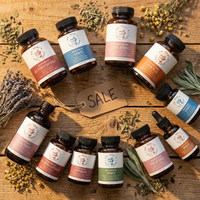


When it comes to herbal healing, not all plants are created equal. Two labels you’ll often see on herbal products are “wildcrafted” and “cultivated.” While they may sound similar, these terms reflect very different origins, energies, and nutritional values.
Dr. Sebi consistently emphasized that nature makes no mistakes—and that the closer a plant remains to its natural environment, the stronger its electric charge and healing potential. Wildcrafted herbs, harvested from untouched ecosystems, carry the full mineral intelligence of the earth. Cultivated herbs, even when grown organically, often lack that same vibrancy because they rely on human interference and controlled soil conditions.
This article explores the distinctions between wildcrafted and cultivated herbs, why those differences matter, and how to make informed choices when sourcing herbs for healing and daily use.
What Does “Wildcrafted” Mean?
Wildcrafted herbs are plants that grow naturally in their native habitat—uncultivated, untamed, and untouched by synthetic fertilizers or pesticides. They thrive in symbiosis with the surrounding ecosystem, absorbing minerals from living soil, mountain water, and unaltered sunlight.
To be considered truly wildcrafted, herbs must be:
-
Harvested ethically and sustainably from wild regions.
-
Taken without damaging the local ecosystem or depleting the population.
-
Dried and processed minimally, preserving their full nutrient profile.
Wildcrafted herbs are the closest reflection of nature’s original blueprint. They contain not only a full spectrum of minerals but also subtle plant compounds that form in response to natural stressors—wind, weather, and soil variation—that cultivated herbs never experience. Simply put, they are at their purest form with the strongest flavors, scents, and benefits.
What Does “Cultivated” Mean?
Cultivated herbs are grown by humans—on farms, in greenhouses, or even in controlled hydroponic systems. While they can still be organic and free of chemicals, they are not wild.
Cultivation allows for consistency and larger yields, but it also introduces variables that reduce vitality:
-
Soils may be overused or mineral-depleted.
-
Irrigation water may lack natural mineral content.
-
Plants grow in less diverse microbial environments.
-
Artificial shade or protection reduces natural resilience.
Cultivated herbs are not bad, but they are often weaker. Their controlled environment lacks the electrical and mineral stress that drives potency in wild plants. They basically grow in their own little bubble.
The Dr. Sebi View: Nature Over Nurture
Dr. Sebi always favored wildcrafted herbs. He taught that plants grown without interference hold their natural electric resonance—a living frequency the body recognizes.
He warned that when humans begin to manipulate growth, hybridize species, or feed plants unnatural substances, the chemistry changes. The plants may look the same, but their mineral structure and energetic properties shift, impacting their healing ability.
This is at the heart of alkaline healing. Wildcrafted herbs don’t just contain minerals—they contain information, coded by nature, that instructs the body how to restore balance.
Key Differences Between Wildcrafted and Cultivated Herbs
|
Aspect |
Wildcrafted Herbs |
Cultivated Herbs |
|
Origin |
Grown in natural, uncultivated environments |
Grown on farms or controlled environments |
|
Soil Quality |
Rich in diverse minerals and microbes |
Often managed soil, may be nutrient-depleted |
|
Water Source |
Natural rain and spring water |
Irrigation systems or filtered water |
|
Exposure |
Sun, wind, and natural stressors |
Controlled light and temperature |
|
Nutrient Density |
Higher; contains full mineral spectrum |
Often lower due to predictable conditions |
|
Energetic Vibrancy |
Strong electrical charge |
Softer, less dynamic |
|
Sustainability Risk |
Must be harvested ethically |
Easier to scale without ecosystem damage |
|
Flavor and Aroma |
Rich, earthy, complex |
Milder, less intense |
|
Cost |
Higher due to rarity and labor |
Lower and more consistent |
Why Wildcrafted Herbs Are More Potent
-
Mineral Diversity
Wild soils are alive with bacteria, fungi, and minerals—iron, magnesium, calcium, and potassium—giving wildcrafted herbs their “electric” mineral spectrum. -
Adaptive Phytochemistry
Wild plants must adapt to weather, insects, and competition. This stress increases phytochemicals (like alkaloids and flavonoids) that enhance their healing potency. -
Energetic Integrity
According to Dr. Sebi, wild herbs maintain the original frequency of life. This “bioelectric” resonance supports cell communication and energy flow within the body -
Synergistic Growth
Wild plants coexist with natural companions, benefiting from complex root and fungal networks. Cultivated herbs, often isolated, lose that synergy.
When Cultivated Herbs Are Acceptable
There are cases where cultivated herbs are practical or necessary—especially when wild populations are endangered. Ethical cultivation can still produce high-quality herbs if:
-
Soil is remineralized using volcanic ash, sea minerals, or compost.
-
Water is spring-based and free of chlorine or fluoride.
-
Seeds come from original, non-hybrid, and non-GMO varieties.
-
Harvesting and drying are done gently in sunlight, not machines.
These practices preserve much of the herb’s life force and make sustainable herbal healing possible for the long term.
The Dangers of “Fake Wildcrafted” Labels
As natural healing grows in popularity, many products now claim to be “wildcrafted” when they are not. Some companies harvest from semi-cultivated fields or greenhouse systems and still use the term for marketing.
True wildcrafted herbs come with transparency—information about where and how they were harvested, ideally by small foragers or reputable suppliers.
Red flags to watch for:
-
Perfectly uniform leaves or colors (wild herbs are never uniform).
-
Super-low prices on rare herbs.
-
Lack of natural aroma or taste intensity.
Sustainability and Ethics in Wildcrafting
Dr. Sebi emphasized not only purity, but respect for nature’s balance. Wildcrafting must never mean overharvesting.
Ethical wildcrafting guidelines include:
-
Taking no more than 10–15% of any plant patch.
-
Never uprooting the entire plant—harvest leaves, flowers, or partial roots.
-
Leaving enough for animals and ecosystem regeneration.
-
Harvesting only from clean, unpolluted regions far from industrial zones.
Sustainable wildcrafting ensures both human and planetary health remain in harmony.
Examples of Common Wildcrafted Herbs in Alkaline Healing
|
Herb |
Key Benefits |
Why Wildcrafted Matters |
|
Burdock Root |
Blood purifier, iron-rich tonic |
Wild roots absorb deep earth minerals unavailable in farm soil. |
|
Dandelion |
Liver detox, digestive support |
Wild versions have stronger bitters and mineral density. |
|
Elderberry |
Immune strength, circulation |
Naturally higher flavonoid content in mountain-grown berries. |
|
Sea Moss |
Mineral balance, gland support |
True wildcrafted sea moss, ideally from colder waters, contains 90+ trace minerals; pool-grown lacks structure. |
|
Bladderwrack |
Iodine for thyroid health |
Ocean-grown, not tank-raised, ensures full mineral charge. |
|
Sarsaparilla |
Iron and hormonal balance |
Wild roots possess richer aroma and denser saponins. |

How to Identify High-Quality Wildcrafted Herbs
-
Look for Natural Variation
Wild herbs rarely look identical. Color differences and uneven textures indicate authenticity. -
Check the Aroma
Wild herbs have deep, earthy scents—never faint or perfumed. -
Taste the Bitterness
Slight bitterness is a sign of active compounds and natural alkaloids. -
Trace the Source
Herbal suppliers share details about the region and harvest method. -
Research the Species
Some herbs are only potent in wild form; others grow fine when cultivated in mineral-rich soils.
The Case of Wildcrafted Sea Moss
Perhaps the most discussed example of this distinction is sea moss.
-
Wildcrafted sea moss grows naturally on rocks in the ocean, absorbing minerals from seawater. It has darker colors (brown to purple), a rough texture, and an ocean-like flavor.
-
Pool-grown sea moss is cultivated in tanks with synthetic seawater and fertilizers. It grows quickly but lacks mineral depth and tends to be overly smooth or gelatinous. Usually a pale beige color, over-salted, and flavorless.
Dr. Sebi consistently used wildcrafted sea moss for its unmatched mineral and electrical value. Even the weight of the harvested sea moss was significant to him; it is indicative of the mineral richness.
 Liquid error (snippets/card-product line 54): invalid url input
Dr. Sebi Sea Moss Gel
 Liquid error (snippets/card-product line 54): invalid url input
Elderberry Sea Moss Gel
 Liquid error (snippets/card-product line 54): invalid url input
Mango Sea Moss Gel
 Liquid error (snippets/card-product line 54): invalid url input
Sea Moss Starter Pack
The Energetic Perspective
In natural healing, food and herbs are more than biochemistry—they carry frequency.
Wildcrafted herbs contain a vibrational imprint from the environment: mountain winds, ocean tides, mineral rain. This imprint interacts with the body’s own energy field, harmonizing systems beyond the physical. Cultivated herbs, by contrast, exist in controlled settings with limited elemental exposure, and thus carry a softer, less dynamic frequency.
This concept may sound spiritual, but it mirrors what modern plant science recognizes: plants exposed to environmental diversity produce a broader range of adaptive compounds. Nature’s complexity is the secret to potency.
FAQs
Q: Are cultivated herbs useless?
A: Not at all. When grown organically in mineral-rich soil, cultivated herbs can be effective and sustainable. Wildcrafted herbs simply offer a higher energetic and nutritional tier.
Q: Why are wildcrafted herbs more expensive?
A: Because they require manual harvesting, small-batch drying, and careful transport from remote areas—all of which preserve purity but limit supply.
Q: How can I store wildcrafted herbs?
A: Keep them in airtight glass jars away from sunlight and moisture. Use within 6–12 months for optimal potency.
Q: Can wildcrafted herbs be taken daily?
A: Yes, but rotate them. Different herbs supply different minerals; variety prevents overstimulation of one organ system.
Dr. Sebi’s Perspective in Practice
Dr. Sebi’s formulas almost exclusively used wildcrafted herbs—from Honduras, Africa, Mexico, and all over the world. He insisted on this not for marketing, but because he observed measurable differences in results. Patients consuming wildcrafted tonics experienced faster, more complete cleansing and restoration.
He often said that cultivated herbs are “domesticated” or "hybrids"—their power subdued by human control. In contrast, wild herbs remain alive, charged with the energy of the elements. This “living intelligence” is what he believed allowed the body to heal itself once the right minerals were supplied.
Conclusion
The difference between wildcrafted and cultivated herbs is ultimately the difference between nature’s original design and human imitation.
Wildcrafted herbs embody the earth’s intelligence—minerals, electrical energy, and adaptive resilience—making them ideal for true cellular healing. Cultivated herbs have their place, especially when grown ethically and sustainably, but they rarely match the vibrancy of their wild counterparts.
When possible, choose authentic wildcrafted herbs from trusted sources that honor both the plants and the planet. Each time you do, you participate in a healing exchange that sustains not just your body, but the ecosystems that made those herbs possible.
The power is in nature, not in the lab. Go back to the wild, and you’ll find your medicine.
📚 Explore More: Dive deeper into this topic in our Ultimate Herbal Healing guide.


